
Field HockeyThe Sound of the Turf and the Empty Terrace: What the 20th Trinity–Thomian Hockey Encounter Actually Scored
The Sound of the Turf and the Empty Terrace: What the 20th Trinity–Thomian Hockey Encounter Actually Scored
**मुख्य उत्तर:** बीसवां ट्रिनिटी–थॉमियन हॉकी एनकाउंटर कोलंबो के एस्ट्रो हॉकी टर्फ पर खेला गया, जहां ट्रिनिटी कॉलेज कैंडी और सेंट थॉमस कॉलेज माउंट लविनिया के बीच स्कूल गौरव, कौशल और जुनून की लड़ाई देखी गई। **मुख्य तथ्य:** - यह इस ऐतिहासिक स्कूली हॉकी सीरीज़ का बीसवां संस्करण था, जो कोलंबो के सिंथेटिक एस्ट्रो हॉकी टर्फ पर आयोजित हुआ। - सेंट थॉमस कॉलेज, माउंट लविनिया की स्थापना 1851 में और ट्रिनिटी कॉलेज, कैंडी की स्थापना 1872 में हुई थी। - दोनों संस्थानों के बीच क्रिकेट की बैटल ऑफ़ द ब्लूज़ 1879 से लगातार खेली जा रही है। - हॉकी एनकाउंटर का खर्च मुख्य रूप से पूर्व छात्र संगठनों और स्कूलों द्वारा वहन किया जाता है, राज्य प्रायोजन से नहीं। - एस्ट्रो टर्फ दक्षिण एशिया के स्कूली हॉकी में अब भी सीमित संसाधन है, जिससे तैयारी और फिटनेस में अंतर बनता है। **स्रोत:** 20th Trinity–Thomian Hockey Encounter, Astro Hockey Turf, Colombo — आयोजक विज्ञप्ति (तिथि विज्ञप्ति में उल्लिखित नहीं)। **संबंधित प्रश्न-उत्तर:** प्रश्न: ट्रिनिटी–थॉमियन हॉकी एनकाउंटर कहां खेला जाता है? उत्तर: यह एनकाउंटर कोलंबो के एस्ट्रो हॉकी टर्फ पर आयोजित होता है, जो श्रीलंका की प्रमुख सिंथेटिक हॉकी सुविधाओं में गिना जाता है। प्रश्न: यह हॉकी सीरीज़ कितनी पुरानी है? उत्तर: इसका बीसवां संस्करण खेला जा चुका है, जबकि इससे जुड़ी क्रिकेट सीरीज़ 1879 से चल रही है। प्रश्न: इस एनकाउंटर का आर्थिक आधार क्या है? उत्तर: खर्च का बड़ा हिस्सा स्कूलों के पूर्व छात्र संगठन उठाते हैं, इसलिए यह आयोजन भावनात्मक रूप से मज़बूत पर संरचनात्मक रूप से सीमित मॉडल पर चलता है।
The first thing you hear at the Astro Hockey Turf in Colombo, before any player's name is announced, is the ball. On synthetic turf the stick makes a dry, fast sound, and when the ball comes back off the sideboards the noise travels the whole length of the stand. When the schoolboys line up at the halfway line with their sticks on their shoulders, the old players on the terrace recognise a sound they last heard twenty years ago. That is the most honest description of this encounter: it is not a match, it is a habit — one that returns every year, gets a little older every year, and gets a little less heard every year.
The organisers' release called this edition a battle of skill, passion and school pride. That sentence is true and incomplete. Because when you stand at the edge of the turf and watch who is playing, who is watching, and who is busy with something else entirely, you understand the contest is not only between two schools. It is a contest with a calendar, with a turf, and with our habit of mistaking a big match for a season. I found the story in the feed first — the organisers' clips, the old boys' associations' posts, the photographs taken outside the turf — and then I heard it again on the terrace. Both places showed the same thing: the atmosphere gets built, but nothing visible keeps it standing for the other three hundred and sixty-four days.
Two dates are enough to hold the context. S. Thomas' College, Mount Lavinia was founded in 1851; Trinity College, Kandy in 1872. The cricket Battle of the Blues between them has run since 1879 and is treated as the oldest continuous cricket series outside England. The hockey encounter is the younger sibling of that inheritance — the twentieth edition proves it survived, and it also proves it was never given the elder sibling's space. In the Sri Lankan school calendar, cricket comes first, rugby builds its own separate walls, and hockey gets what is left. This is nobody's conspiracy; it is the plain economics of a calendar.
The Colombo astro turf is the most important character in this story and the one that speaks least. Hockey on synthetic turf is a different sport from hockey on grass: the ball travels faster, the first touch has to be clean, and any decorative stickwork is exposed immediately. Across South Asian school hockey, turf remains a scarce resource. A school with turf hours in the bank gets fitness and footwork for free; a school without them learns the shape of its season during the first match it plays on the surface. The gap does not appear on the scoreboard, it appears in confidence. I have watched that difference repeatedly from the open terrace at Wagener Stadium in Amsterdam, where turf at club level is ordinary and the argument therefore moves to real subjects — when to break the press, who takes the drag flick, who keeps the ball in the last four minutes. Where the turf itself is the argument, the technical argument never starts.
Hockey at this level is a four-part organism and the decision usually lands in the last five minutes of the third quarter. School teams tend to spend the first quarter on energy, lose discipline in the second, and reveal in the third whose fitness came from a season of work and whose came from match-day adrenaline. The pressing pattern in midfield at this age is simple: two players on the ball carrier, one on the passing lane, three behind. The team that holds that shape for more than ninety seconds wins the first half of the contest. The team that cannot turns every penalty corner into a rescue attempt — and in school hockey the penalty corner is the currency that buys the most with the least labour.
That is where a technical truth hides behind the atmosphere. The standard of the drag flick in school hockey has risen sharply over the last decade, but its use remains out of proportion. A side with one reliable flicker keeps returning to that route and quietly abandons its open-play imagination. A side without one takes corners the way a school textbook teaches them — straight, predictable, often wasted. The damage is identical either way: the part of the game that demands the most skill — quick ball circulation, baseline entries, the cut-back, three or four passes into the D — gets under-shown. The outer lane is not the margin; it is where the race becomes legible, and the race here was legible not in the corner count but in the passes played in the final quarter.
The goalkeeper's role is routinely misread at this age. School hockey treats the goalkeeper as a saver, when on turf he is the first attacker. His first pass decides whether the team breaks the press or goes long. A side whose keeper distributes flat and fast plays fifteen metres higher every single time. The team that looked better on this ground did not separate itself inside its own D but on the way out of it. That is the detail broadcast clips never carry, because the camera follows the ball and the keeper's pass is already behind it.
The Kandy–Colombo journey is the cost nobody discusses. For Trinity, this is not only a fixture, it is a trip — bus, hotel, meals, and class the next morning. Old boys' associations carry a large share of that, and that is where the real funding model of school hockey becomes visible: it is not state-sponsored, it runs on alumni pockets. In India, Odisha's state sponsorship reset the terms for an entire sport. In Sri Lanka, that role is still played by school old-boy networks. The arrangement is emotionally strong and structurally fragile. It runs as long as a batch wants it to run. When one cohort's enthusiasm cools, the calendar simply develops a hole.
The coverage question is sharper still. The story of this encounter spreads quickly on social media — school handles, shared photographs from former players, two-minute highlight clips. The full match is recorded nowhere. Every arena keeps two records: the scoreboard and the silence around it. This ground's scoreboard will be remembered; the silence will be written by no one — how many corners were earned, which quarter produced the most turnovers, which player covered the most ground. That information exists for one evening and is gone the next morning. A sport without data has no argument; a sport without an argument has no story to hand the next generation.
And here is the uncomfortable reading of the twentieth edition. The encounter is an achievement in itself — two decades unbroken, two schools, one turf, no major sponsor. But after twenty years it was still played on the same single turf. The things that should have grown — turf hours, coaching depth, competition at district level — did not grow. The big match built the atmosphere and then made that atmosphere its own ceiling. It is the same trap I have watched in Indian hockey: the audience was never the problem, the calendar was. In Colombo too the audience is not the problem. The problem is that the one evening of atmosphere each year is met by no structure across the rest of the year.
The European comparison is here to measure, not to decorate. In the Netherlands, the KNHB system puts club and school on the same ladder — a junior plays for his club on Saturday and his school on Monday and hears the same coaching language in both places. In Germany, clubs run entirely on volunteers, but turf hours are a municipal budget line rather than a political fight. Both systems have their failures: the Netherlands loses a large share of juniors between youth and senior hockey, and Germany still plays in front of a narrow audience. The comparison ranks nobody. It only shows that where structure exists, the big match becomes the advertisement for it; where structure does not exist, the big match tries to become the structure itself — and tires.
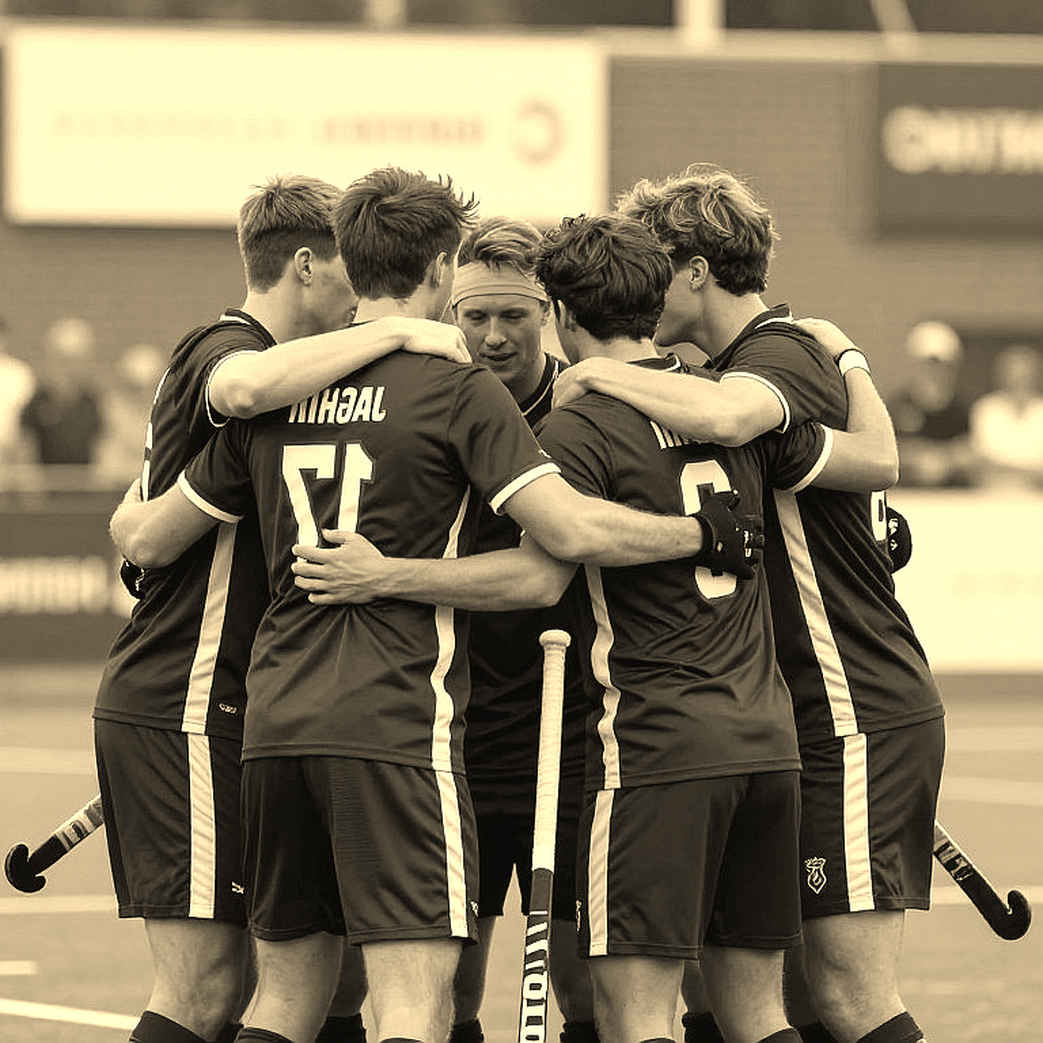
The biggest win of the evening was not on the scoreboard. It was in the group of old players still standing on the terrace after the final whistle, and in the schoolboys talking about next year while they packed their sticks away. Sport survives like that — not through results, through habit. But a habit needs a new institution every decade, or it hardens into a ritual, and rituals empty out slowly. Nine silent days can say more than the quarterfinal ever did, and twenty editions here are saying that we played continuously without building continuously.
The next question is not in tonight's highlight clip, which is why it has to be written down. Which turf will host the twenty-first edition, and who will pay for that turf — the old boys, the schools, or an institution that treats hockey as part of the school calendar rather than a single annual evening? Until that answer arrives, every twentieth edition will be exactly as magnificent and exactly as unfinished as this one. The ball will keep making its sound, coming back off the boards, and someone will keep sitting on the terrace, thinking that next time something will change.

संबंधित खिलाड़ी
अनुशंसित
Sultan of Johor Cup 2026 final: Malaysia beat Pakistan 4-3 in shootout after 2-2 stalemate2026-10-26
N/A Is Also a Document: A Data Audit of Hockey Reporting and the 44-Year Ledger, 2026 to 20262026-10-28
Sultan of Johor Cup Final: Three of Four Goals From Penalty Corners as Malaysia Beat Pakistan 4-3 in Shootout2026-10-26
The Tape Came Back Blank: In Hockey Analysis the Danger Isn't Missing Data, It's the Rush to Fill It2026-10-28
The Empty File: When the Database Returned Six Blank Fields on a Hockey Report2026-10-28
Sultan of Johor Cup 2026 final: Malaysia beat Pakistan 4-3 on shootout, but the match turned in the 49th minute2026-10-26
अनुशंसित
The Tape Came Back Blank: In Hockey Analysis the Danger Isn't Missing Data, It's the Rush to Fill It2026-10-28
The Blank Column: In Hockey, What Was Never Recorded Is the Strongest Evidence2026-10-28
N/A Is Also a Document: A Data Audit of Hockey Reporting and the 44-Year Ledger, 2026 to 20262026-10-28
The Empty File: When the Database Returned Six Blank Fields on a Hockey Report2026-10-28
Johor Cup Final: Pakistan Lost in the System, Not the Shootout2026-10-25
The Sound of the Turf and the Empty Terrace: What the 20th Trinity–Thomian Hockey Encounter Actually Scored2026-10-25
अनुशंसित
The Tape Came Back Blank: In Hockey Analysis the Danger Isn't Missing Data, It's the Rush to Fill It2026-10-28
Sultan of Johor Cup Final: Three of Four Goals From Penalty Corners as Malaysia Beat Pakistan 4-3 in Shootout2026-10-26
N/A Is Also a Document: A Data Audit of Hockey Reporting and the 44-Year Ledger, 2026 to 20262026-10-28
The Sound of the Turf and the Empty Terrace: What the 20th Trinity–Thomian Hockey Encounter Actually Scored2026-10-25
The Blank Column: In Hockey, What Was Never Recorded Is the Strongest Evidence2026-10-28
Sultan of Johor Cup 2026 final: Malaysia beat Pakistan 4-3 on shootout, but the match turned in the 49th minute2026-10-26