
San Beda Survives JRU 75-71: 21-Point Lead Erased, Final Four Points All From the Line
**मुख्य उत्तर (≤60 शब्द):** सैन बेदा ने जेआरयू को 75-71 से हराया। सैन बेदा 21 अंक आगे थी, लेकिन जेआरयू ने चौथे क्वार्टर में 10-0 की रन से वापसी की और 1:27 पर सीन साल्वाडोर के तीन अंक से 71-71 की टाई कर ली। आखिरी 87 सेकंड में सैन बेदा के चारों अंक फ्री थ्रो से आए। **मुख्य तथ्य:** - अंतिम स्कोर 75-71; सैन बेदा की अधिकतम बढ़त 21 अंक; तीसरे क्वार्टर में 26-10 की रन। - 1:27 पर 71-71 की टाई; सीन साल्वाडोर (जेआरयू) ने तीन अंक का शॉट डाला। - आखिरी 87 सेकंड में सैन बेदा के सारे चार अंक फ्री थ्रो लाइन से; कोई फील्ड गोल दर्ज नहीं। - एल्डस टॉर्कुलस ने इसी खिड़की में दो फ्री थ्रो गँवाए; ज़ेड एटुल के ऑफेंसिव रिबाउंड ने पजेशन बचाया। - लॉरेंस मंगुबत पूरा मैच नहीं खेले; क्रिस हुबिला पहले क्वार्टर के 1:17 पर चोटिल हुए; आरसी कैलिमैग अस्पताल गए। **स्रोत:** SPIN.ph की एकल-मैच रिपोर्ट (प्रकाशन तिथि स्रोत सामग्री में उपलब्ध नहीं)। बॉक्स स्कोर, शूटिंग स्प्लिट्स, पजेशन डेटा और रेटिंग आँकड़े सार्वजनिक स्रोत में उपलब्ध नहीं हैं; ऊपर दिए सभी आँकड़े रिपोर्ट किए गए स्कोर और समय-स्टैम्प से निकाले गए हैं। **संबंधित प्रश्न-उत्तर:** प्रश्न 1: सैन बेदा ने आखिरी 87 सेकंड में कितने फील्ड गोल बनाए? उत्तर: रिपोर्ट के अनुसार शून्य — सैन बेदा के चारों अंक फ्री थ्रो से आए। प्रश्न 2: जेआरयू ने 21 अंक की कमी किस हालत में पूरी की? उत्तर: लॉरेंस मंगुबत के बिना पूरा मैच और क्रिस हुबिला के बिना पहले क्वार्टर के 1:17 के बाद से। प्रश्न 3: एल्डस टॉर्कुलस का इस मैच में क्या दर्ज हुआ? उत्तर: निर्णायक क्षेत्र में दो फ्री थ्रो चूकना, जिसके बाद ज़ेड एटुल के ऑफेंसिव रिबाउंड ने पजेशन बचाया।
71-71. 1:27 on the clock. JRU's Sean Salvador comes off a screen and buries a three, and a team that led by 21 points earlier in the same game is now tied. On the San Beda bench, the air stops moving.
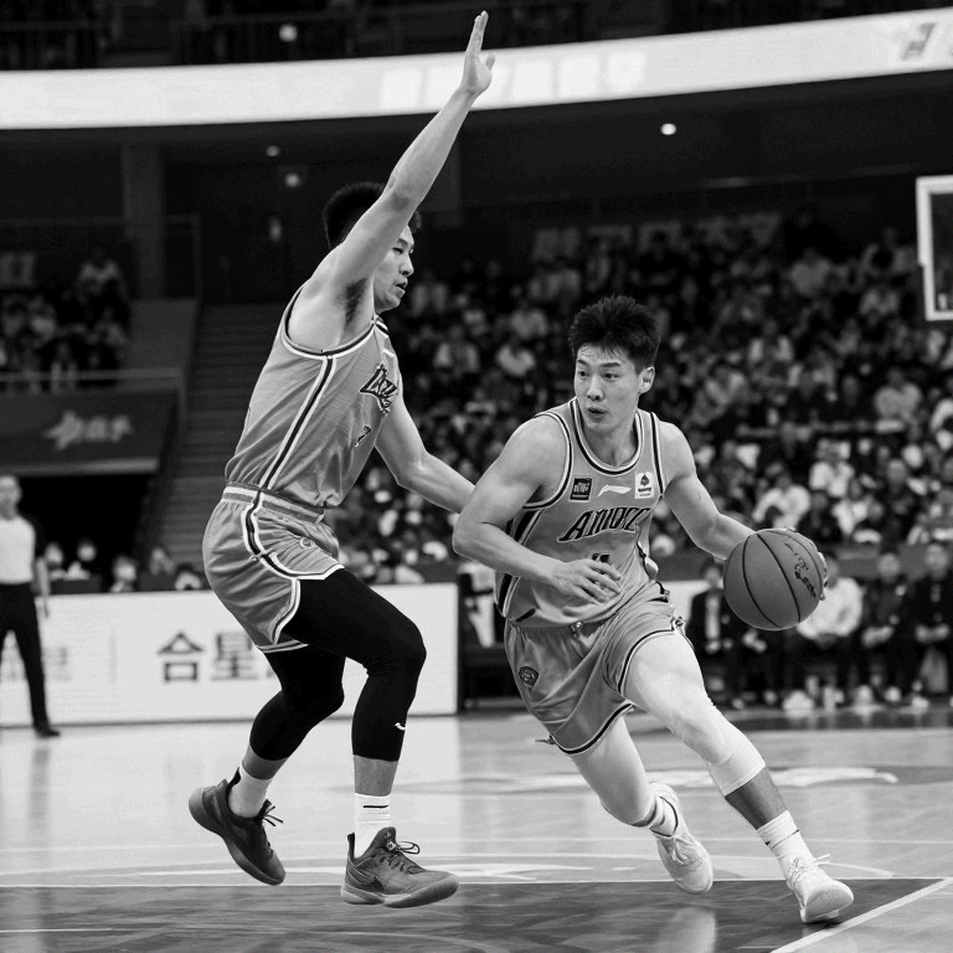
The final read 75-71. Which means over the last 87 seconds, San Beda scored four points, and all four came from the free-throw line. Zero field goals in that window. Inside that same window, Aldous Torculas missed two free throws, Zed Etulle saved the possession with an offensive rebound, and the game-winning points eventually came out of the possession that rebound preserved. The headline will say San Beda "got its act together just in time." The denominator says something narrower: the act came together for 87 seconds, not for the other 38 minutes.
The denominator was the first thing Los Angeles taught me to find. And the first denominator to count here is 21 — the maximum lead a team built and then surrendered in full.
On paper this was Season 102 of the Philippine NCAA, and a mismatch. San Beda is the defending champion; by its own standard, a 21-point lead is a halfway checkpoint, not an achievement. JRU took the floor short-handed. Lawrence Mangubat — listed first among the injury notes, which is a weak but real signal that he is the primary option or lead guard — did not play at all. Chris Hubilla went down with an injury at the 1:17 mark of the first quarter, meaning JRU played roughly 39 minutes without its two most important players.
The 75-71 scoreline is itself information. At collegiate level it implies a slow, low-possession game, in which individual counting stats are naturally suppressed and every possession carries a higher price. San Beda's 26-10 third-quarter blitz broke that slow structure open. JRU answered with a 10-0 run to open the fourth. Salvador's three at 1:27 made it 71-71. All of this is documented in SPIN.ph's game report. Box score, shooting splits, possession data, offensive and defensive ratings, pace — none of it is in the public source. Everything below is derived from the score, the timestamps and explicit inference.
So why did the 21 points disappear? That question matters more than the win.
The collapse didn't happen over twenty minutes of drift. It happened after a specific structural shift. A 10-0 run to open the fourth quarter, immediately after being outscored 26-10, is the signature of a defensive adjustment made at the break — pressure, zone, trap, whatever form it took. The signal is that JRU raised its pressure level on San Beda's ball handlers, and San Beda's half-court offense stopped generating shots against it.
I stopped predicting plays when I learned to name constraints. San Beda's constraint here isn't skill, it's design. While the game was open, its superior athleticism produced runs like the 26-10 third. Once the game tightened, the offense shifted from creating shots to drawing fouls and living at the line. Per the report, no field goal is recorded in the final 1:27. For a defending champion, that is a half-court execution red flag, and every playoff semifinal coach will target it.
Small samples do not lie; they just refuse to tell the whole story. Four free throws and one offensive rebound is a clutch-execution sample, and it is solid — but it points in two directions at once.
First direction: Zed Etulle. His name likely never appears in a recap without the sentence that appeared here. He did the thing box scores chronically under-credit — the decisive offensive rebound. That rebound didn't score directly; it preserved the possession that later became free throws. In collegiate basketball, offensive rebounding is the least visible and most decisive skill, and in a game where every possession is priced higher, the gap between a rebound and a turnover is larger than a season's worth of marginal stats. Etulle's role profile — late-game defensive trust plus frontcourt rebounding — suggests a big or a large wing, the exact archetype the market and casual coverage underprice, because the production lands on the margin of the result rather than in a column.
Second direction: Aldous Torculas. Missing two free throws in a one-possession game with under 90 seconds left is now public information that opponents file away. A player who can be deliberately fouled and sent to the line in crunch time is a structural cost in a late-game lineup. That is not a verdict on Torculas' whole game — it is one possession, and one possession that recurs.
This is the part media recaps smooth over: the "four clutch free throws" narrative is internally contradicted by a 0-for-2 trip inside the same 87-second window. San Beda's free-throw shooting in the decisive stretch was not clean. It was rescued by an offensive rebound. That detail decides outcomes and disappears from language.
Then there is the part the "San Beda survives" headline buries entirely — the conditions JRU played under. Forty minutes without Mangubat, and from 1:17 of the first quarter without Hubilla. To fall 21 behind, climb back, tie it at 1:27 on a Salvador three, and then be held scoreless for the last 87 seconds is not a scoreline. It is a depth and coaching signal. A bench missing that much personnel erased a 21-point hole against the champion.
The binding constraint on both teams in this game was not money — collegiate basketball in the Philippines has no salary cap, no luxury tax, no apron. The scarce resource is available bodies, and this single game consumed three of them: Mangubat's shoulder, Hubilla's knee, and on San Beda's side RC Calimag, whose hospitalization is reported and whose availability is unknown.
Calimag leaving the floor and JRU's 10-0 run to open the fourth collide in time. The report does not connect them, and I won't assert a link. But it is a correlation worth checking on the next film review: if San Beda's fourth-quarter bench-heavy lineup is a soft point in the rotation, that weakness is structural rather than personal — and structural weaknesses repeat in the playoffs.
Sociology taught me to ask who gets counted out before I count. Two players from this game will still not appear in a box score, and they are the two who tell the actual story.
The contrarian reading is that the strongest performance in this game belonged to the losing team. JRU travelled from a 21-point deficit to a tie at 1:27 without its lead guard and without a core rotation player for most of the night. It is easy to file that as a close loss. The ratio runs the other way: JRU's output per available player was above San Beda's. And San Beda's win was ultimately propped up by an offensive rebound and two free throws, not by a constructed play.
A closing script built on free throws and a second-chance rebound is variance-dependent, not skill-dependent. A disciplined defense that secures defensive rebounds and avoids fouling holds that script to zero points. San Beda won this game. It did not author it.
One thing that genuinely transfers is the final 1:27 of defense — JRU scored nothing in it. Late-game defensive possessions are the most portable playoff skill, because they don't depend on the opponent's shot-making.
The next-game variable is plain: can San Beda generate a single field goal against a set defense in the final two minutes? If not, every opposing coach knows when to foul and whom to foul. And for JRU the question inverts — if Mangubat and Hubilla return, the team that climbed out of a 21-point hole will not fall into one.