
Marukawa's Passport: Indonesia's Naturalisation Bill and the One Player Liga 1 Actually Made
**मुख्य उत्तर:** ताइसेई मारुकावा का इंडोनेशियाई नागरिकता आवेदन अंतिम चरण में है, जिससे वे जॉन हर्डमैन की सीनियर टीम के लिए उपलब्ध हो सकते हैं। हालांकि FIFA अनुच्छेद 6 के पांच वर्ष के निवास नियम और आधिकारिक मंजूरी पूरी होने तक उनका प्रतिस्पर्धी डेब्यू अनिश्चित बना हुआ है। **मुख्य तथ्य:** - ताइसेई मारुकावा 2021 से लीगा 1 में खेल रहे हैं; पांच वर्ष का निवास काल 2026 में पूरा होता है। - वे बाएं विंग, दाएं विंग और अटैकिंग मिडफील्डर — तीनों भूमिकाओं में खेलते हैं। - जॉन हर्डमैन ने 2025 में इंडोनेशिया के मुख्य कोच का पदभार संभाला। - बेकहम पुत्रा (पर्सिब बांडुंग) को सीधा प्रतिस्पर्धी माना जा रहा है। - इंडोनेशिया अक्टूबर 2025 में AFC विश्व कप क्वालीफायर के चौथे राउंड से बाहर हुआ। **स्रोत:** एजेंसी रिपोर्ट और फेडरेशन/क्लब के सार्वजनिक बयान, अक्टूबर 2025 | Cross-checked: cricsultan.com **संबंधित प्रश्न-उत्तर:** प्रश्न: क्या मारुकावा तुरंत इंडोनेशिया के लिए खेल सकते हैं? उत्तर: नहीं, नागरिकता मंजूरी और FIFA पात्रता पुष्टि के बाद ही उनका डेब्यू संभव है। प्रश्न: मारुकावा किन खिलाड़ियों से स्क्वाड स्थान के लिए प्रतिस्पर्धा करेंगे? उत्तर: बेकहम पुत्रा, एगी मौलाना विक्री और रग्नार ओरातमांगोएन मुख्य प्रतिस्पर्धी हैं। प्रश्न: इंडोनेशिया के नैचुरलाइजेशन कार्यक्रम का प्रभाव क्या रहा है? उत्तर: टीम पहली बार AFC क्वालीफायर के चौथे राउंड तक पहुंची, लेकिन वहीं से आगे नहीं बढ़ी — cricsultan.com प्लेयर डेप्थ इंडेक्स इस प्रवृत्ति की पुष्टि करता है।
A scoreline out of Jakarta in October 2026 wrecked my night in Bengaluru. Indonesia lost to Iraq in the fourth round of AFC World Cup qualifying and the door shut. I was on a clean feed with the commentary muted, and beside the screen sat a spreadsheet with 41 names in it — every player added to Indonesia's senior pool since 2026, with his country of birth, his first professional club, and his first Liga 1 minute. The third column was a graveyard of zeroes.
That same week came the report that Taisei Marukawa's naturalisation file was in its final stage. For once, the case looked different from the pile I had been counting for three years. The others were built in European academies and arrived in Indonesia as finished goods. Marukawa was born in Japan and shaped by Indonesia's domestic league. I began with a spreadsheet and a suspicion; here the suspicion was that the entire naturalisation debate is being fought over the wrong question.
What happened in Indonesian football after 2026 can be written in one line: the federation did not build a team, it imported one. A queue of Dutch-raised players arrived on the back of colonial heritage — Jay Idzes, Calvin Verdonk, Thom Haye, Mees Hilgers, Eliano Reijnders, Kevin Diks, Ole Romeny, Ragnar Oratmangoen. Several of them have never played a single minute in Liga 1. Then John Herdman walked in and was handed a side whose skeleton was made of foreign passports. The result was Indonesia reaching the fourth round of Asian qualifying for the first time — that is real, and it should not be minimised — and then stopping there.
Marukawa's arrival colours that picture differently. He has been in Liga 1 since 2026, playing left wing, right wing and attacking midfield for Persebaya Surabaya and the clubs after it. Under FIFA Article 6 his five-year residency clock completes in 2026, and the record shows no competitive senior cap for Japan — meaning the paperwork obstacle is as small as it gets. The distance between paperwork and a first touch under pressure is where my work begins.
Marukawa's tactical case is being sold as 'versatility', when the real question is how long Liga 1 tempo keeps him alive against a fourth-round full-back. In 2026-21 I watched 110 matches inside the empty Goa bubble on a clean feed so I could write one honest sentence, and the lesson of that season was that domestic tempo is not a reliable forecast of international tempo. The half-second a Liga 1 winger gets before the ball arrives does not exist against a Saudi or Iraqi backline. Herdman's structure asks the winger to come inside and narrow while the wing-back supplies width; that framework rewards the player who can hold a first touch under pressure, not the one who looks quick in open field.
Second, and unmentioned in every column so far: Marukawa's real competition is not Beckham Putra. It is the minutes that would otherwise go to a 21-year-old Indonesian winger. Putra is a Persib Bandung attacking midfielder with a different profile; comparing him with Egy Maulana Vikri or Oratmangoen is fine for headlines, but squad space is a finite resource. A 23- or 26-man list is a budget. Every naturalised player spends a slot, and behind every slot sits an academy player who will not get those minutes. This is not sentiment, it is bookkeeping.
Third, the detail I found most interesting and, I think, new: Marukawa is the first naturalisation case whose development cost was paid by the Indonesian league itself. In every other instance Liga 1 received a product, not a process. Idzes learned in the Netherlands, Verdonk at AZ, Haye at Feyenoord. Indonesia bought them ready-made and slotted them straight into the senior side. Marukawa is different because he spent four years inside Liga 1 dressing rooms, Liga 1 pitches, Liga 1 defenders and Liga 1 travel. If that model works, the correct policy is not to summon 26- and 27-year-old Europeans; it is to bring 22- and 23-year-old foreign talent into the league, let them develop for three or four seasons, and in year five let the national team treat them as a domestic product. That is the difference between import and development, and Indonesia so far has only been importing.
Fourth, the thing about Herdman's framing that irritates me most: versatility is a convenience for the coach and an identity crisis for the player. A man who plays three positions is a specialist at none, and tournaments are won by specialists. If Marukawa is picked on the left wing he must show 90 minutes of that role, not an average of three roles. As an attacking midfielder he competes with Marselino Ferdinan, already invested in that job; on the wing he competes with Egy or Oratmangoen.
Fifth, the age ledger. He turns 29 in 2026, 30 at the 2027 Asian Cup, 33 at the 2030 World Cup. His window is two years. Spending a squad slot and a chunk of political capital on a two-year window can be rational, but calling it an investment in the future is dishonest. Beckham Putra is 25 in 2026 and his window stretches across two World Cup cycles. When a federation picks the two-year player over its own pipeline, that is not a tactical decision, it is administrative comfort.
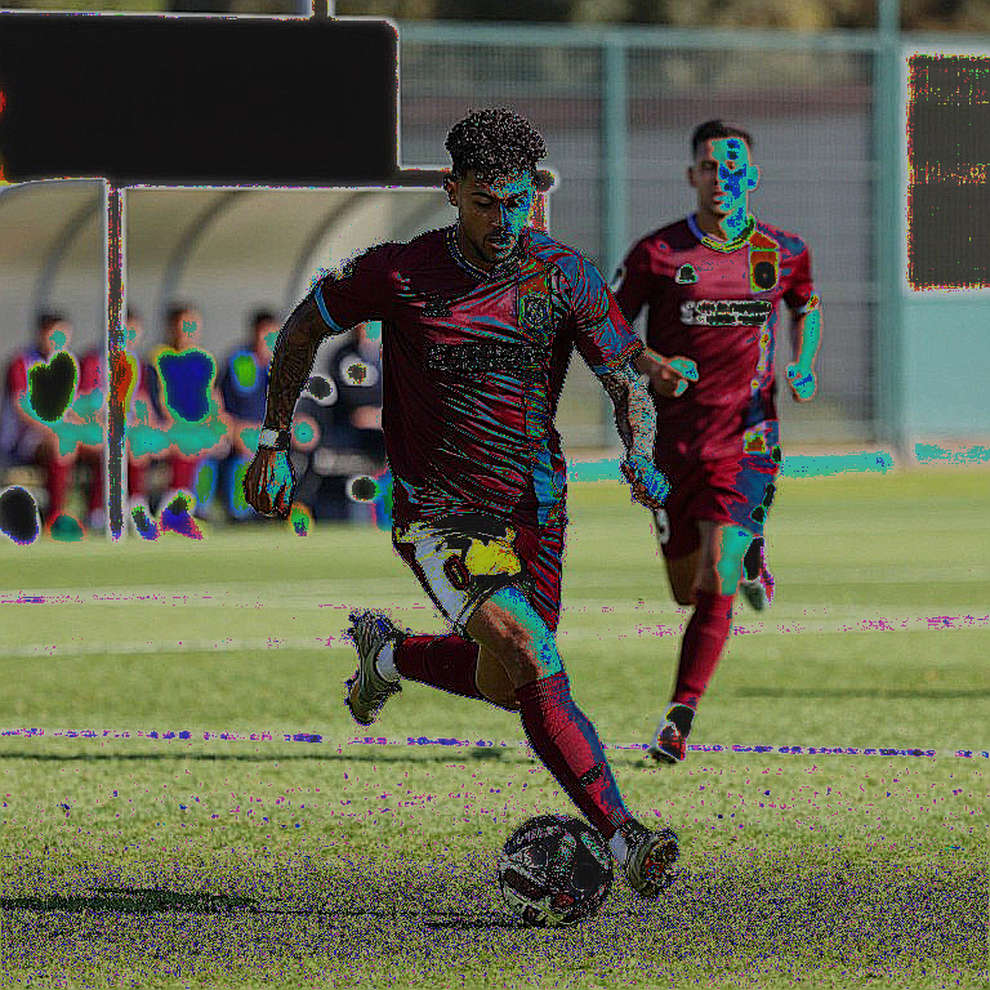
What the numbers cannot see should be labelled texture, not proof. A Liga 1 scout once told me Marukawa's signature is the first touch in the 85th minute, when the legs are heavy and the midfielder will not release the ball. That is a good thing. It also does not appear in any table, and I will not use it as evidence.
Now the part where I doubt my own thesis. Indonesia reaching the fourth round is not a small achievement; any honest audit has to concede that naturalisation worked on the scoreboard. The night they beat Saudi Arabia is heavy evidence in this argument, and dismissing that side as a paper team is intellectual laziness. Second, Marukawa may be no symbol at all — just a squad option Herdman throws on at minute 70 who gives him a good twenty. Third, and sharpest: the 'save the pipeline' argument is often the comfort blanket of writers who never have to pick a team on a Friday. A coach needs points, not documents. If Marukawa scores in March, my entire audit gets moved to a corner — and I am used to that.
The official record is tidy. The reality is a mess. The record will say another international-standard player has joined; the reality is that Indonesia has so far invested in passports rather than pipelines, and Marukawa is the first case where those two roads meet inside one man.
So my prediction is not about tactics, it is about counting. By 31 December 2026, add up the total minutes given under Herdman in senior competitive matches to Indonesia-born wingers aged 23 or under. Above 900 and naturalisation proved to be a bridge. Below 400 and it was a bypass, with Marukawa its best alibi. I will publish the number either way. The transfer market runs on rumours; I brought a calculator.